early findings with students
The first 250 students to use Sway for regular course assignments discussed and debated topics including: investing public resources to address educational disadvantages faced by boys and men, the appropriate response to gender-related distress in children, and whether Kamala Harris’s defeat is best explained by misogyny. Nearly all were paired with classmates who disagreed with them about the topic. This page presents student ratings of nine key performance measures. For more recent data, see Survey Data and Instructor Reports.
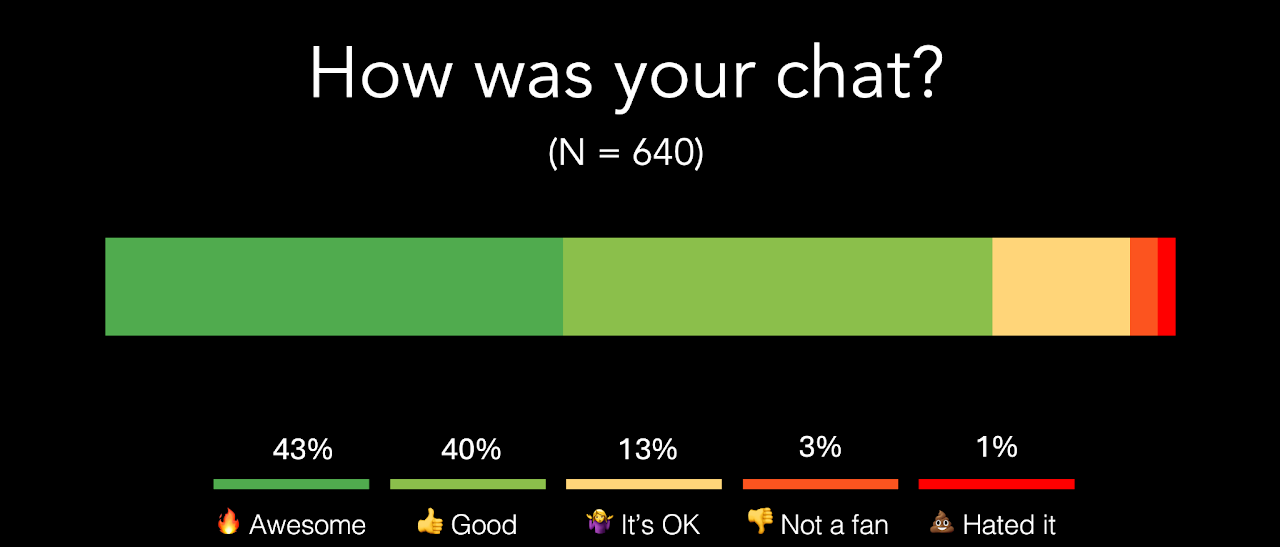
Nearly all chats (94%) were between pairs of students who disagreed about a polarizing political, social or moral issue. Despite the potentially divisive subject matter, over 80% of students rated these chats as "Awesome" or "Good" and only 4% gave a negative rating.
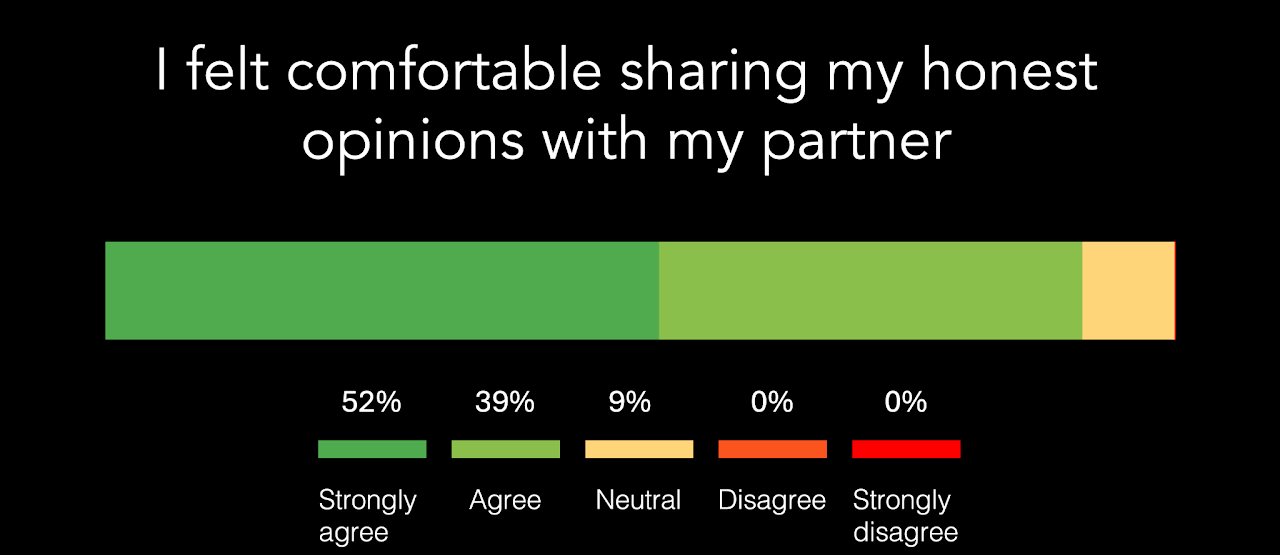
Nationwide, students report self-censoring in classroom discussions, written assignments, and common campus spaces. Yet in their Sway chats over 90% of students indicated feeling comfortable openly sharing their sincere views.
This is strong evidence that scaffolded one-on-one chats help most students overcome self-censorship. We're studying whether this openness transfers to off-line, in-person classroom discussions.
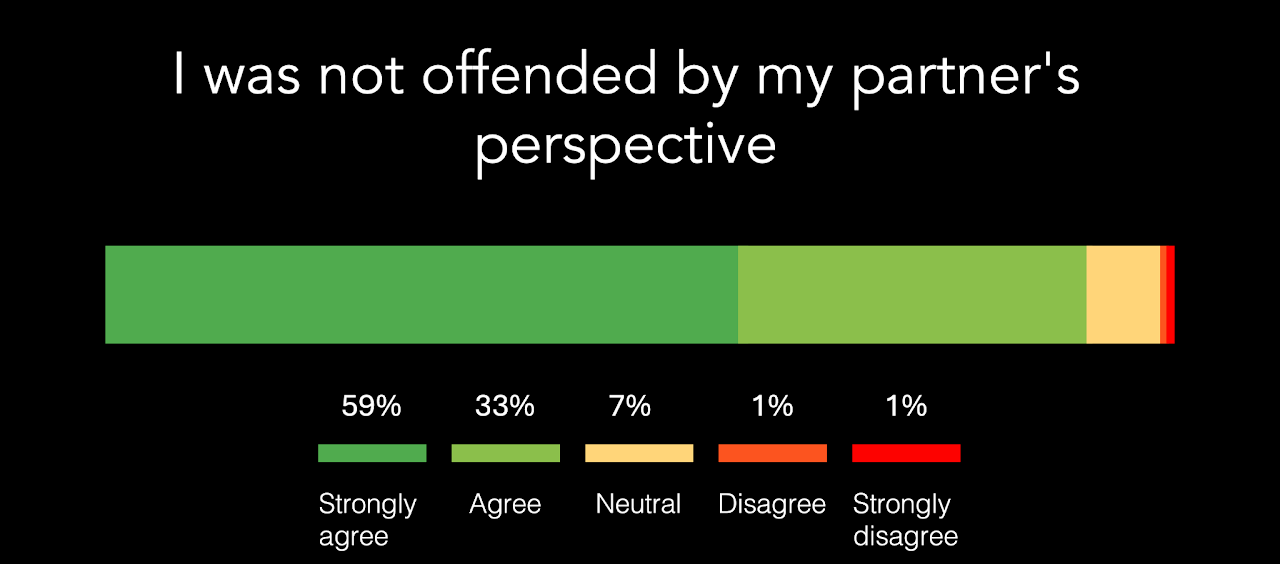
Instructors are often concerned that students will not be respectful if they discuss polarizing topics in class. But that is not what we find in classrooms or on Sway. Mirroring findings from in-person classroom discussions at Carnegie Mellon University, over 90% of students reported that their partner was respectful and only 2% reported that they were offended by their partner's opposing viewpoint.
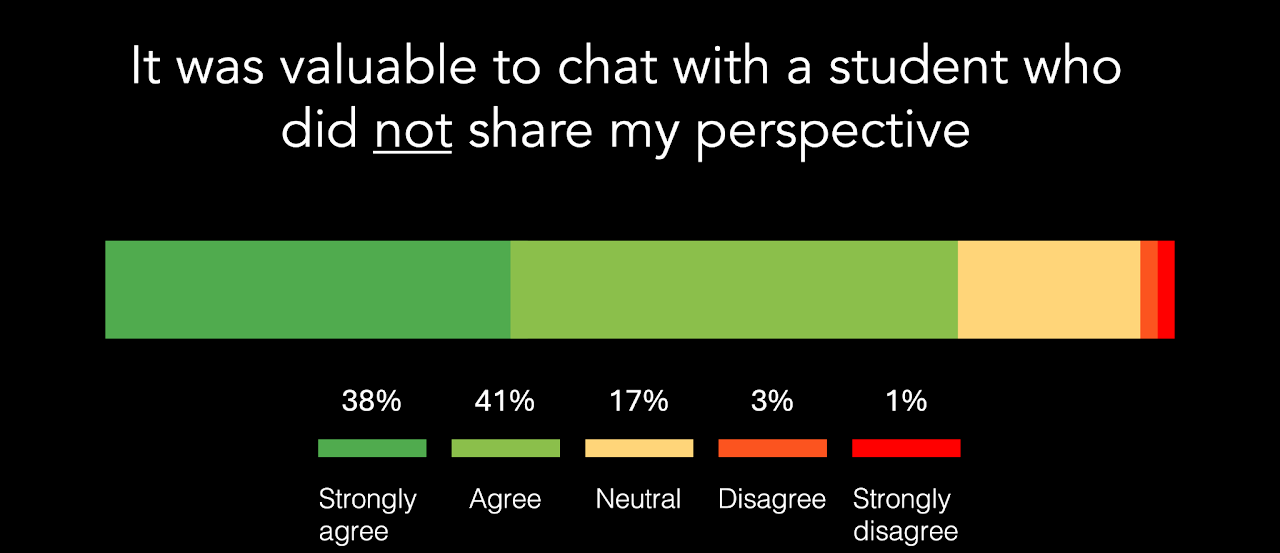
Students were not only rarely offended by their partners, nearly 80% also said it was valuable to chat with a classmate who saw the issue differently (and only 4% said it was not valuable). This suggests that chatting on Sway helps students appreciate the nuance behind opposing viewpoints.
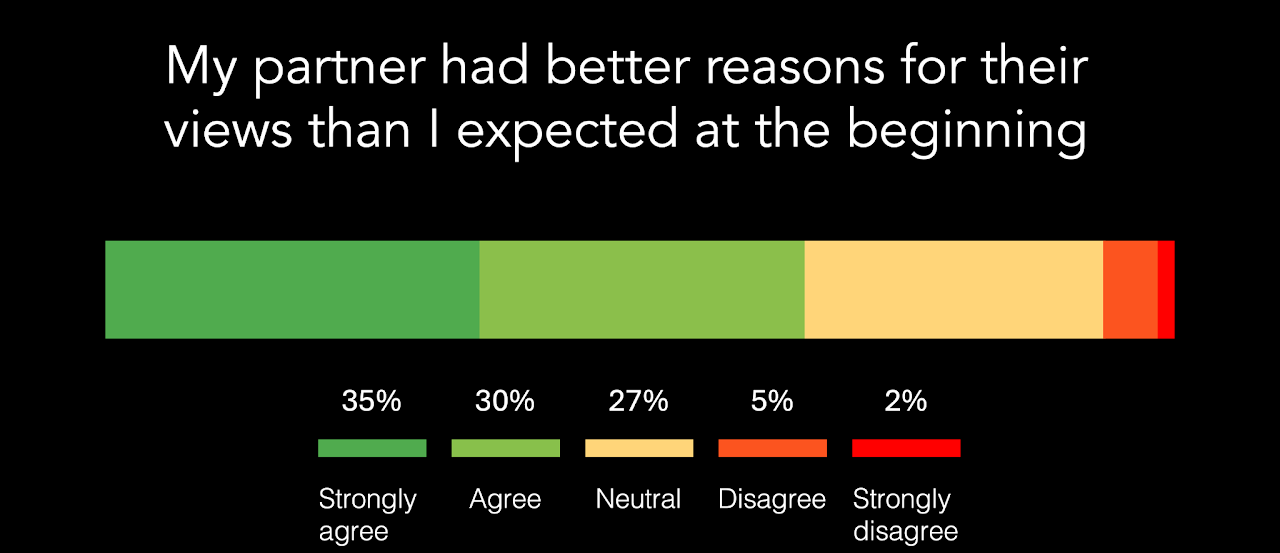
Replicating a key finding from our pilot empirical studies, most students also reported discovering their partners had better reasons for the opposing viewpoint than they expected.
This is a crucial step toward recognizing that people can hold a different perspective on a controversial topic without being motivated by stupidity or ill will.
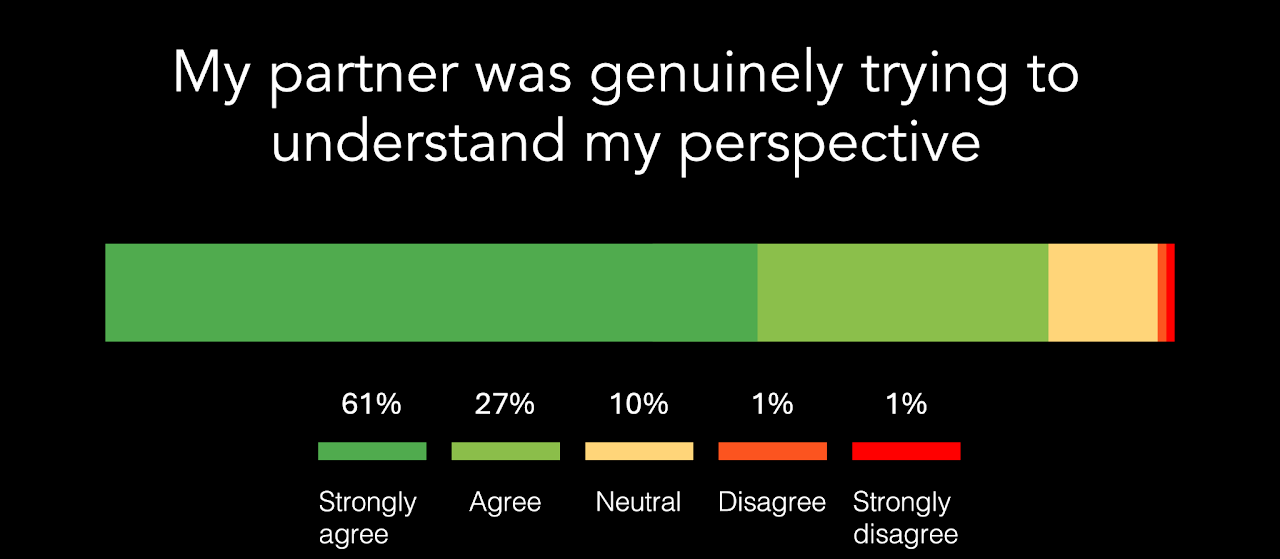
While many students argued passionately for their views, their chats weren’t just debates—they were sincere attempts at mutual comprehension.
Nearly 90% of students said their partner genuinely tried to understand their viewpoint. This finding is confirmed by post-chat Understanding Quizzes where students correctly answered 4.1 out of 5 questions on average.
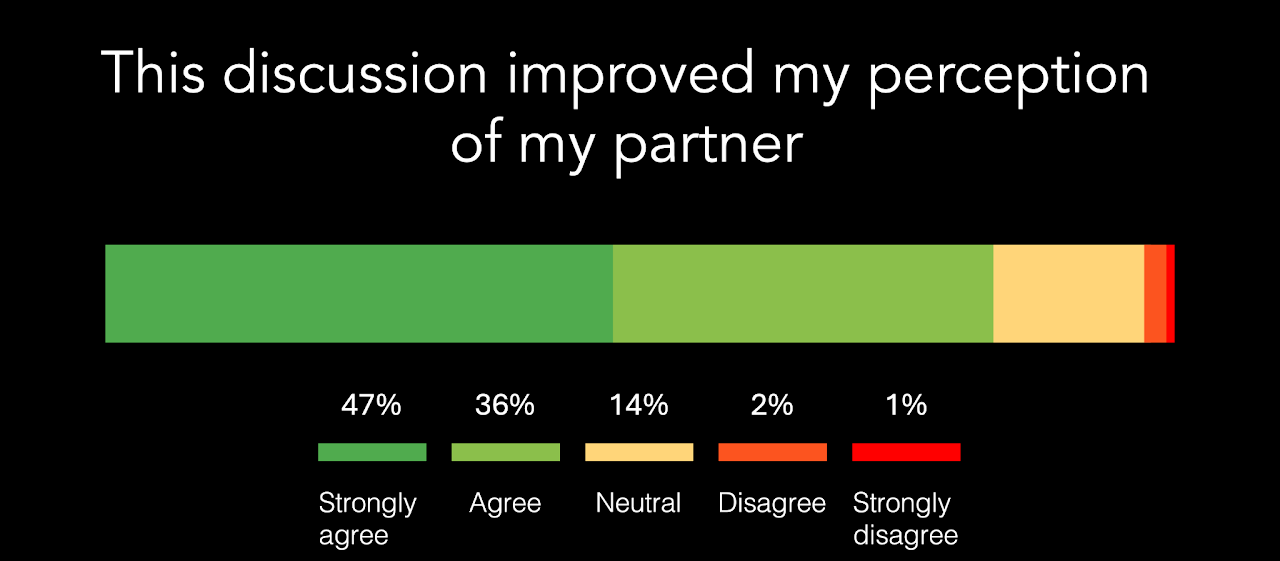
For over 80% of students, talking through their disagreements in a scaffolded chat improved their perceptions of their classmates.
This result rivals that found with CMU students who participated in small-group, in-person classroom discussions guided by specially trained human facilitators.
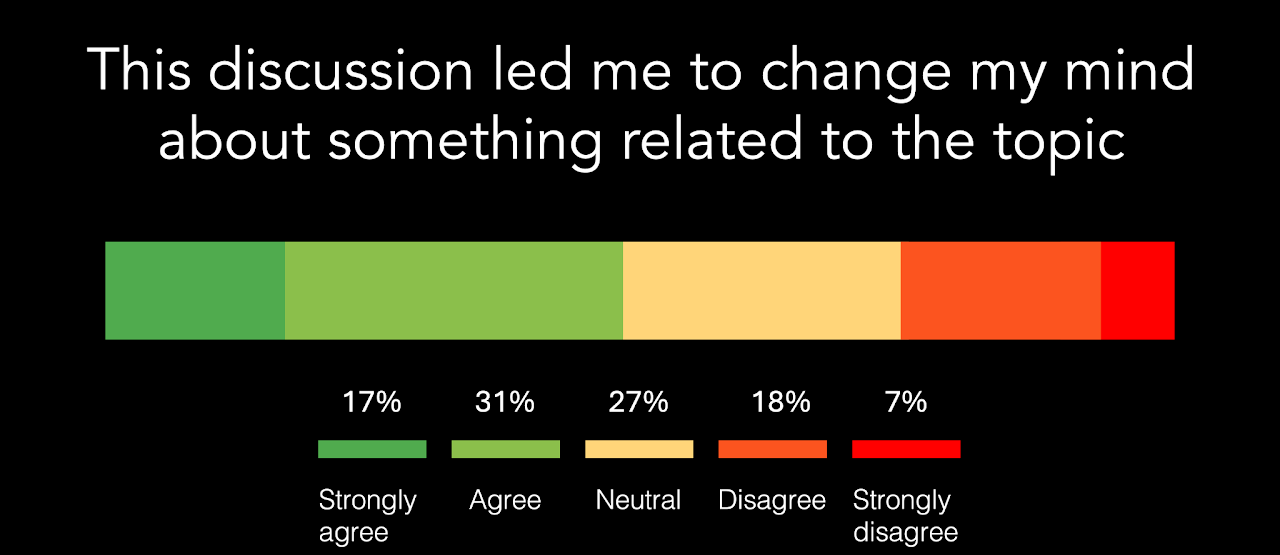
After their Sway chats, around 50% of students reported changing their minds about something related to the topic. Students also rated the topic statement before and after their chats. On average, students' opinions toward the topic of discussion moved 2.1 points closer on a 7-point scale ranging from "Strongly agree" to "Strongly disagree" [95% confidence interval: 1.7 to 2.6; p < 0.0001].
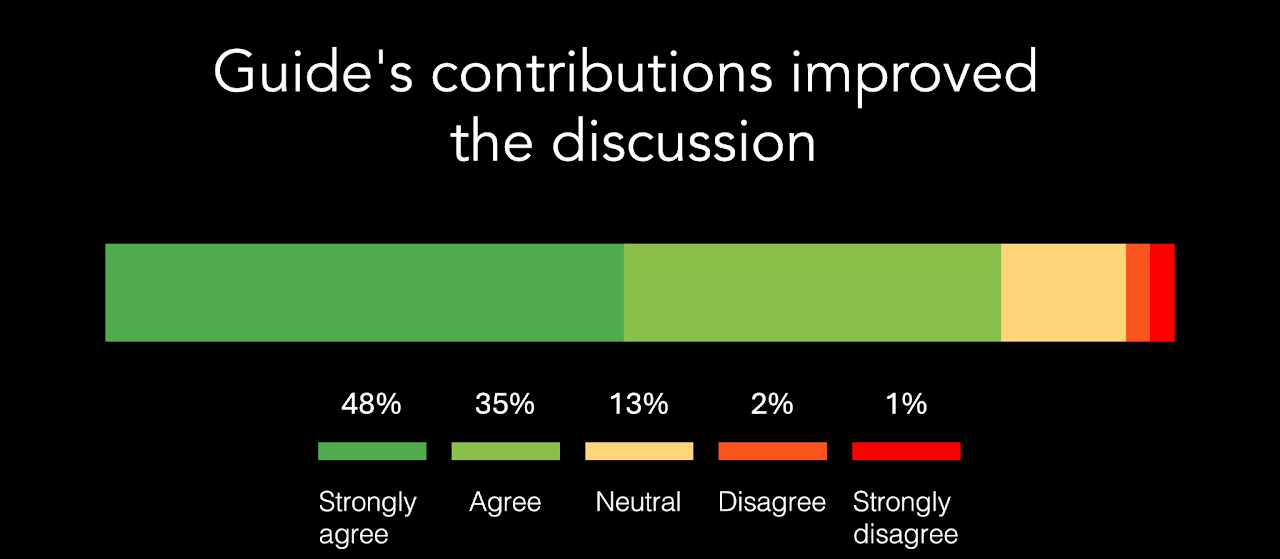
Finally, the vast majority of students credited Guide with improving their discussion. As one student said in their optional written feedback, "Guide gave unexpectedly thoughtful feedback and clearly understood the discussion, bringing it to a deeper, more insightful place." We believe Sway's current Guide barely scratches the surface of what will be possible as we learn from real student discussions while simultaneously gaining access to faster, cheaper and more sophisticated AI models.
It’s more important than ever for students from all backgrounds to learn how to engage constructively with opposing viewpoints and—sometimes—intense disagreements. We hope you’ll consider using Sway to give your students more opportunities to engage deeply on topics that matter to them, whether related to your course or to broader issues energizing campus.
Sway is free for instructors and students at colleges and universities. If you'd like to use it with your students, you'll receive instructions to get set up after registering your interest. Instructors will also find sample language for syllabi and announcements on our templates page.