Learning through disagreement
Sway is a chat platform that pairs students who disagree for one-on-one conversations and facilitates better discussions between them. It is developed with Heterodox Academy and inspired by John Stuart Mill's radical view that engaging with opposing perspectives is an essential tool for improving reasoning and solving complex problems.
Intellectual humility
Students moderate extreme views
Most constructive dialogue programs can only report what participants say about themselves. Sway provides behavioral evidence. As one example, each student’s opinion is measured before and after each conversation.
PRE/POST OPINION PAIRS
Students are
0×
more likely to moderate an extreme view than to harden a moderate one.
In one 30‑min chat
0%
drop in the share of students holding extreme positions.
With polarizing topics
0%
of students who entered at an extreme came away holding a more moderate view.
Benchmarked against a control group: students who did not converse on Sway showed only 14% of this effect. Opinions are measured immediately after each conversation; we are now studying how long the shifts last, and whether six to twelve conversations in a semester help students internalize skills they take into the classroom.
Depolarizing campus discourse
How student attitudes shift
Students at the extremes moderate. Students with no opinion start forming their views.
Share of students at each starting position who moved toward or away from the center of a 7‑point scale after one conversation. Students at the poles (1 and 7) can only move inward, and matching on disagreement selects pairs that momentary error may exaggerate — but neither artifact predicts the moderates at 3 and 5 moving outward.
Measuring convergence
The gap between partners narrows
Nearly every pair starts with a gap — the distance between the two students’ positions on the 7‑point opinion scale. After one conversation that gap shrinks in two thirds of pairs, and it widens only in one in seven.
Change in the partners’ opinion gap, in points on the 7‑point scale
Mean opinion gap
95% CI 38%–40% · p < 0.0001
Both partners rated the topic statement before and after the conversation, so each pair yields a gap before and a gap after. The mean gap fell by 1.4 points (paired t‑test, p < 0.0001; Cohen’s d = 0.78). The 2.5% of pairs who started at the same position (Devil’s Advocate chats) had no gap to close. Matching selects pairs that start far apart, so some of this drop is regression after that selection rather than attitude change.
Between partners
Rational updating, one pair at a time
Many people expect the most common outcome to be both students moving closer to the center — but that’s not what we see in the data. More than twice as often, only one student moves toward the other. This is not compromise for the sake of getting along.
apart
from partner
moved
closer together
toward partner
How student opinions changed after engaging with an opposing viewpoint. In 75% of pairs at least one partner moved toward the other; in only 2.8% did both move apart. “Only one moved toward partner” remains the most common outcome on the hardest political topics.
Measuring student understanding
Students understand opposing perspectives
After every conversation, each student answers five questions about what their chat partner actually argued — their reasons, objections, and rebuttals — and a majority of students ace it.
is a perfect 5 / 5
Sway’s post‑chat Understanding Quiz tests each student’s understanding of their partner’s reasoning. Each quiz has five four‑choice questions, AI‑generated from the chat transcript. Results reveal students are listening closely, understanding, and remembering their partner’s reasoning in detail.
Privacy & safety
Students treat each other with respect
One‑on‑one, students engage with respect and curiosity; the hostility familiar from social media rarely appears.
Moderation at scale
<0%
of student messages flagged as potentially unconstructive.
Encrypted conversations
Instructors and staff cannot read identifiable transcripts or view any individual student’s opinions.
Students control what’s shared
Students choose what goes to instructors and can delete their accounts at any time.
Never used to train commercial AI
Student data stays out of third‑party model training.
Research is opt‑in
Participation in studies is always a student’s own choice.
Across more than 6,000 ratings by students from across the United States, 92% agreed that “my partner was respectful” (1.5% disagreed) and 90% agreed that “I was not offended by my partner’s perspective” (2.6% disagreed).
Inclusion & fairness
Guide treats all students with respect
Guide, Sway’s AI discussion facilitator, participates in all student chats. After each chat, students rate the statement:
“Guide treated me and my partner with equal respect.”
Only 3% disagree.
Guide doesn’t offer opinions.
It joins every conversation to pose challenging questions, surface hidden assumptions, and de‑escalate tense moments — without taking sides. Instead of arguing, it pushes students to reason more carefully and engage the strongest version of the opposing view.
600+ politically diverse Americans found no bias.
Partisan reviewers evaluated real transcripts on abortion, healthcare, immigration, and trans athletes. Left and right alike judged Guide even-handed, and both correctly flagged bias when it was experimentally introduced.
Source material
Every statistic summarizes real conversations
Each is an aggregate of thousands of one‑on‑one discussions. Transcripts, instructor reports, and student feedback are below.
Sample chats
Anonymized transcripts of one-on-one debates — gun laws, abortion, AI — shared with the students’ permission.
Read the threads →Instructor reports
AI-written summaries of classroom debates: the shifts, the concessions, and the sticking points, with no student named.AI-written summaries of Sway assignments from across the disciplines.
Browse the reports →Student feedback
First-person feedback from students on what discussing across disagreement was like — and, one page on, from their instructors.
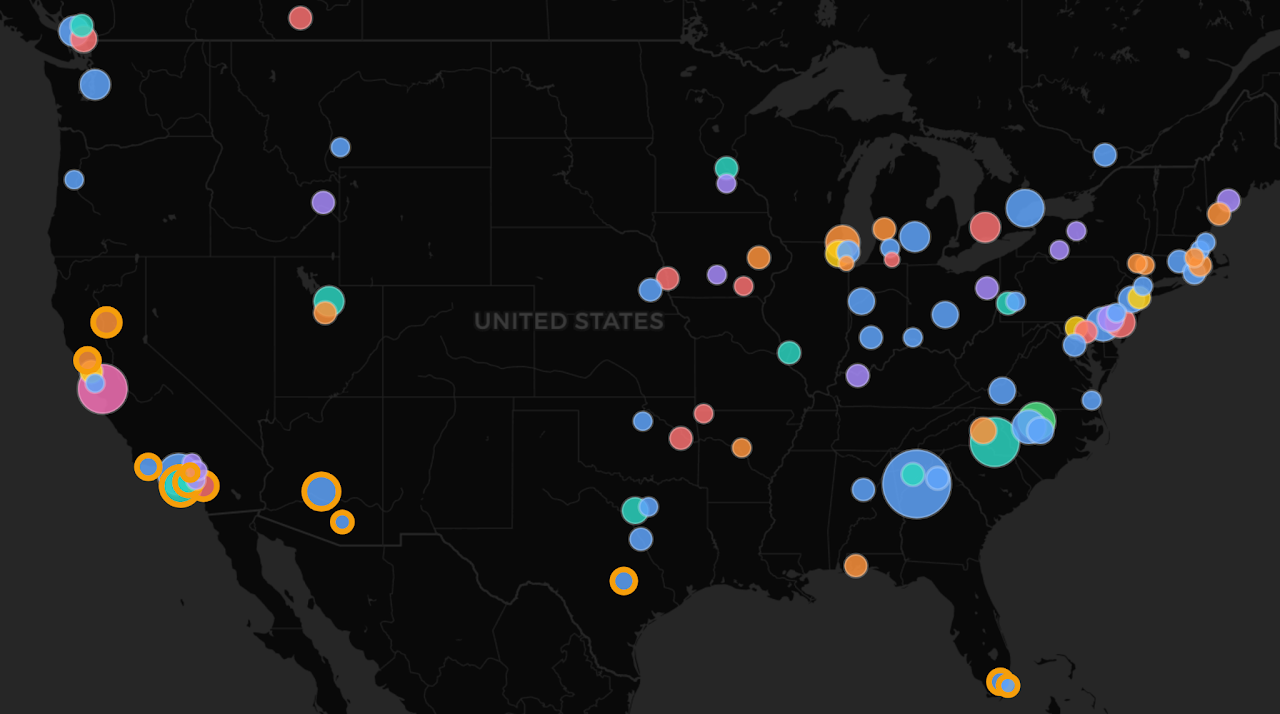
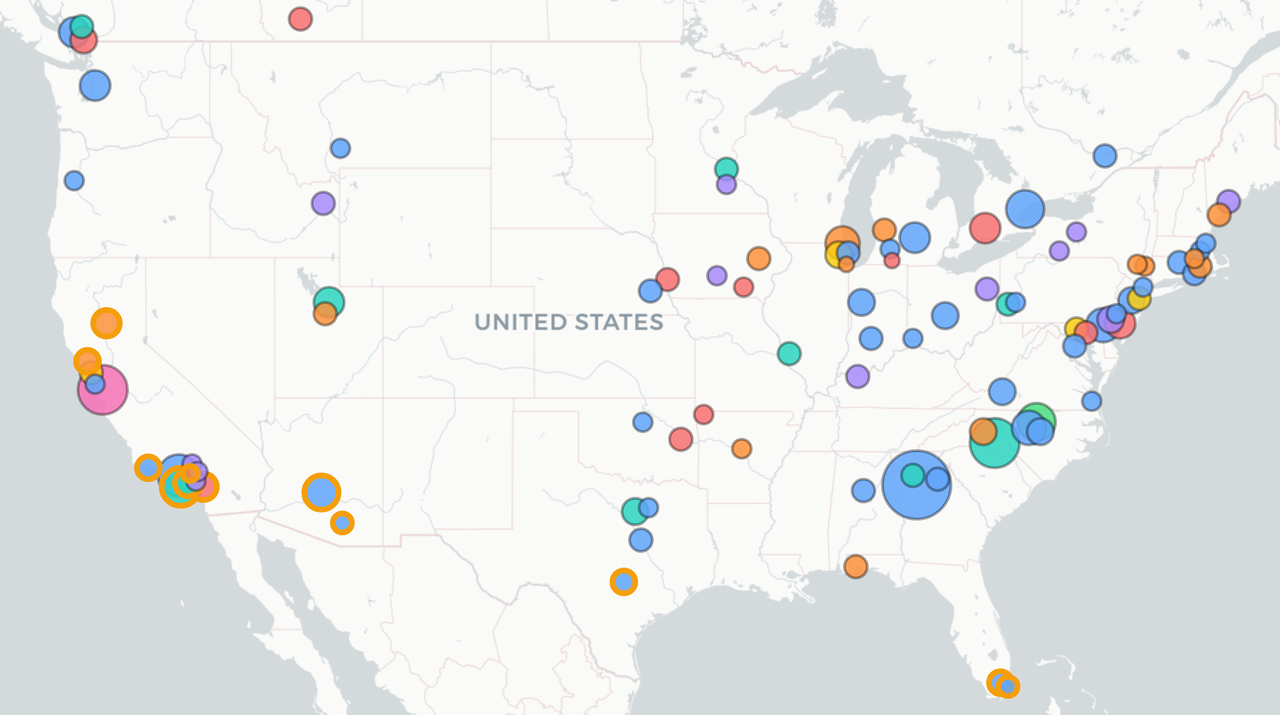
Read the feedback →Some of the schools where students have used Sway
- Carnegie Mellon U
- Columbia University
- CC of Baltimore County
- George Washington U
- Georgia State
- Grand Valley State
- Harvard University
- Indiana University
- Madison Area Technical College
- Michigan State U
- Northeastern Illinois U
- Ohio State University
- Pennsylvania State U
- Pitzer College
- Providence College
- Purdue University
- Rutgers University
- Saint Louis University
- Stanford University
- Swarthmore College
- U of Alabama at Birmingham
- UNC Chapel Hill
- UNC Charlotte
- UCLA
- U of Alabama
- U of Delaware
- U of Georgia
- U of Pennsylvania
- U of Ottawa
- U of Queensland
- U of West Florida
- Virginia Tech

SWAYBETA.AI
Learning through
disagreement
Supported by